
Understanding Pip in Forex Trading for Nigerian Traders
Learn how pip affects your forex trades in Nigeria 🇳🇬, calculate its value accurately, and manage risks to protect your ₦ investments wisely in the currency market 💱.
Edited By
Charlotte Hill
When you step into forex trading, the term pip comes up almost immediately. Pips, or "percentage in point," represent the smallest price change a currency pair can make. For Nigerian traders navigating the forex market, understanding pips is essential because they directly affect the gains or losses from a trade.
Think of pips like cents in naira; just as one kobo is the tiniest movement of ₦1, one pip is the tiniest movement of a foreign currency price. For most currency pairs, a single pip is 0.0001 of the quoted price. For example, if the USD/NGN rate moves from 460.0000 to 460.0001, that 0.0001 change is one pip.
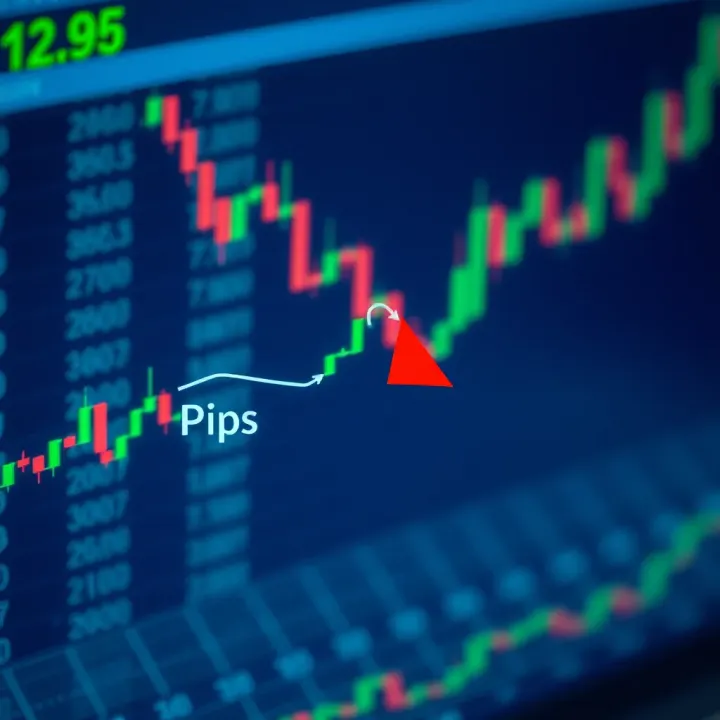
Why do pips matter? Pips serve as the building blocks of profit and loss in forex. Instead of saying you made or lost a certain fraction of a naira, traders count the number of pips gained or lost, which simplifies performance tracking and risk calculation.
Understanding how to calculate and interpret pips helps Nigerian traders manage their trades with more precision, especially given naira’s volatility.
Here’s a quick illustration to make things clearer:
You buy EUR/USD at 1.2000 and sell it at 1.2025.
The price rose by 25 pips.
If your trade size means each pip is worth $10, you made $250 before fees and spreads.
For Nigerian traders, applying this knowledge means converting pips into real naira value to understand actual profits or losses.
Forex brokers often show pip values differently depending on the lot size and currency pairs. On local platforms like MTN's OPay or international brokers offering naira trading accounts, keep a close eye on how pip movements translate to your account balance.
The core use of pips is to:
Measure price movements accurately.
Calculate profit and loss efficiently.
Manage trade risks with stop-loss and take-profit levels.
As you get comfortable with pips, your trade decisions become sharper, especially during unpredictable naira fluctuations or when trading exotic pairs involving NGN.
Understanding pips isn’t just technical detail; it’s the foundation for building effective strategies that suit Nigeria’s unique trading environment.
Pips form the backbone of price measurement in forex trading. Understanding what a pip is and how it works is essential for anyone serious about tracking gains or losses in currency trading. For Nigerian traders, mastering pips lays the foundation for smart decision-making, from setting targets to managing risks.
A pip, short for "percentage in point" or "price interest point," represents the smallest price change a currency pair can make in the forex market. Usually, it’s the fourth decimal place in most currency pairs. For example, if the USD/NGN pair moves from 460.00 to 460.01, that 0.01 is one pip. In simpler terms, a pip lets you measure exactly how much the exchange rate has changed, even when the movement seems tiny.
The basic role of a pip is to standardise profit and loss calculations. Since forex prices move in minute fractions, traders rely on pips to quantify these variations clearly. Without the concept of pips, it would be difficult to track the precise performance of trades over time.
Remember, understanding pips helps you to not only know when to enter or exit trades but also to size your trades properly in relation to your account balance.
Pips directly reflect the fluctuations in the prices of currency pairs. Take for instance EUR/USD moving from 1.1200 to 1.1210; that’s a movement of 10 pips. In the case of Nigerian traders dealing in pairs like USD/NGN or GBP/NGN, pip changes represent the shifting exchange rates influenced by local economic conditions, Central Bank of Nigeria (CBN) policies, and global market forces.
It’s important to note that while pips are usually the fourth decimal place, some pairs with the Japanese yen (JPY) quote pips differently – often the second decimal place counts as one pip. This difference matters in calculation and risk management.
A practical example: If you buy USD/NGN at 460.00 and the rate rises to 461.00, the 100-pip increase translates directly into profit if your trade size is constant. This shows how pips act as a measuring rod for price changes.
Understanding how pips track currency movements allows traders to grasp market trends quickly, set realistic stop-loss and take-profit levels, and assess the impact of small fluctuations on their investments.
In short, pips give currency traders a clear, standard language to talk about tiny price movements that add up to significant gains or losses.
Understanding how to calculate pips is essential for Nigerian traders because forex pairs behave differently depending on their type and currency involved. Accurately calculating pips means you can determine profits, losses, and risks with confidence. This step has practical consequences on how you manage your trades and money.
A standard pip is typically equal to 0.0001 of a currency pair’s price—this applies to most forex pairs like EUR/USD or GBP/USD. However, since trading moved to fractional pricing, brokers began quoting prices with an extra decimal place to offer more precision. This smaller unit is called a fractional pip or a pipette, worth one-tenth of a standard pip, or 0.00001.
For example, if EUR/USD moves from 1.1500 to 1.1501, that’s one standard pip. But if it moves from 1.15005 to 1.15006, that’s one fractional pip. Fractional pips matter because they help you spot smaller moves, which is especially useful in scalping or high-frequency trading.
Calculations depend on the currency pair’s number of decimal places and base currency. Major pairs like USD/NGN or EUR/USD usually follow the 0.0001 pip rule. Minor pairs without usd (e.g., EUR/GBP) often follow the same format.
Exotic pairs involving a currency like NGN (Nigerian Naira) or TRY (Turkish Lira) might behave differently because of higher exchange rate values. With USD/NGN trading around ₦460 to ₦480, a one-pip move equals 0.0001 of the pair price, but since NGN is the quote currency, one pip’s actual naira value changes based on trade size.
To calculate pip value in your account currency, use this formula:
If you trade 10,000 units of USD/NGN at ₦460, pip value = (0.0001 / 460) × 10,000 = ₦2.17 per pip. Understanding this helps you align your risk per trade, important amid naira volatility and forex margin considerations.
Most Nigerian traders rely on forex platforms like MT4, MT5, or local brokers' tools such as FXTM or Alpari to automatically calculate pip values. These platforms consider your account currency and trade size, reducing errors.
If you prefer manual calculations, online pip calculators simplify converting pip differences into your base currency amount. You can also use spreadsheets customized for your trade size and pair.
Having a clear grasp of pip value lets you set realistic stop-loss and take-profit points, which safeguards your investment amid Nigeria's dynamic forex market.
Ultimately, knowing how to calculate pips for different currency pairs equips you to trade smarter and guard your funds better in the often unpredictable Nigerian forex scene.
Understanding pips is the backbone of successful forex trading, especially in Nigeria where market conditions demand careful precision. Pips measure the smallest unit of price movement in currency pairs, and this small detail helps Nigerian traders quantify gains and losses accurately. Without tracking pips properly, even a seasoned trader risks miscalculating profits or underestimating risks.
Traders use pips to translate price changes into real profit or loss amounts. For instance, suppose you buy the EUR/USD pair at 1.1200 and sell at 1.1250; the 50-pip difference represents your raw gain. If each pip is worth $10 for your trade size, that equals $500. Nigerian traders often convert these foreign profits into naira instantly, factoring in the naira’s current exchange rate—₦460 to $1, for instance—which helps with budgeting and reinvestment.
This practical use of pips means traders can monitor their trading performance in real time without confusion over fractional moves. Also, brokers like Kuda or OPay provide pip calculators which Nigerian traders can use to estimate pip value for different trade sizes and currency pairs.
Risk control depends heavily on pips. When setting stop-loss or take-profit levels, traders define the maximum pip distance they can tolerate before exiting a trade. Say a trader sets a stop-loss 30 pips below the entry price—this limits potential loss to that pip difference multiplied by pip value.
For many Nigerian traders operating with modest capital, managing risk via pips prevents devastating losses, especially during volatile periods such as ember months or forex market selloffs. Trader A might risk 50 pips on a ₦100,000 trade, whereas Trader B might prefer 20 pips risk with ₦300,000, depending on their risk appetite and trading plan.
Additionally, pips help traders calculate position sizes consistent with their risk tolerance. Understanding how many pips correspond to acceptable loss means Nigerian traders can align position sizing with their financial comfort zone.
Leverage allows traders to control larger positions with smaller capital, but it also magnifies pip values. For example, using 100:1 leverage, a 10-pip move can swiftly increase or wipe out your margin.
In Nigeria, where leverage levels vary by brokers and regulatory policies, knowing how pips interact with leverage is critical. If you trade with ₦50,000 on 50:1 leverage, a 20-pip loss means more than just the raw pip count—it directly affects your margin and triggers margin calls if not carefully monitored.
Moreover, brokers like FXTM and IG Markets provide clear margin requirements and pip value tools, helping Nigerian traders avoid sudden liquidation of positions. Proper pip calculation combined with leverage knowledge ensures that you neither overexpose yourself nor leave money idle on the sidelines.
Mastering pip value, relationship with leverage, and risk management is essential for Nigerian forex traders. It’s not just about chasing profits but preserving trading capital in a market that shifts like Lagos traffic.
In summary, pips are the measuring tape of forex trading success and risk control. Being pip-savvy helps Nigerian traders relate price changes directly to profit/loss, craft sound risk strategies, and align leverage use with personal capital limits. This knowledge protects traders from unplanned losses and sharp market swings, especially in Nigeria's dynamic forex environment.
Understanding pips is essential, but traders often get tangled by some common misconceptions. Clearing these up helps you trade smarter and avoid costly mistakes in the forex market. In Nigeria, where forex trading continues to grow, knowing exactly what a pip is—and what it isn’t—will sharpen your decision-making and enhance your risk management.
Many traders assume a pip always represents the same value, but that's not the case. The size of a pip can vary depending on the currency pair and the market you are trading. For example, the pip value in a major pair like USD/NGN differs from an exotic pair such as USD/TRY (Turkish Lira). This difference comes from factors like the currency’s decimal places and how brokers quote pairs.
For pairs quoted with four decimal places, such as EUR/USD, one pip equals 0.0001. However, yen pairs like USD/JPY are quoted with two decimal places, making one pip equal to 0.01. This variation affects how much profit or loss a pip movement translates to in your base currency.
Also, currency pairs involving the Nigerian Naira (NGN) can show larger pip values because of the naira’s exchange rate volatility and the way brokers price it. For instance, if the USD/NGN pair moves from 775.00 to 775.50, that 0.50 change is equivalent to 50 pips, not 0.50. Knowing this nuance helps traders avoid overestimating or underestimating potential gains or losses.
Forex terminology can get confusing, especially with terms like pips, points, and ticks being used interchangeably. However, each has a specific meaning.
Pip: This is the standard unit of measurement for price change in forex pairs, typically the fourth decimal place (0.0001) for most currencies, or the second decimal place (0.01) for yen pairs.
Point: Sometimes used synonymously with pip, a point can represent a smaller increment called a fractional pip or pipette. For example, a pipette is one-tenth of a pip (0.00001). If EUR/USD moves from 1.14567 to 1.14568, that single digit change is one point or one pipette.
Tick: This term usually belongs to other financial markets like futures or stocks, indicating the minimum price movement allowed. In forex, ticks are less commonly referenced, but some trading platforms still show tick data as the smallest price change.
Getting these definitions straight will help you follow market data better and communicate clearly with brokers or fellow traders.
In practice, when setting stop-loss or take-profit orders, knowing whether you’re dealing in pips or fractional pips impacts how tightly or loosely your risk parameters sit. For Nigerian traders, who often work with brokers offering fractional pip pricing, overlooking this distinction can skew your calculations, leading to either unexpected losses or missed profit opportunities.
By clearing these common misunderstandings, you better position yourself to make precise trading decisions, tailor risk management strategies, and interpret price action as it truly is—not just as it appears on the charts.
Understanding how to apply pip knowledge effectively is essential for boosting your forex trading performance. This is not just about recognising tiny price movements; it’s about turning those movements into actionable strategies that protect your funds and maximise returns. For Nigerian traders, where market volatility and currency fluctuations can be quite sharp, having a firm grip on pips helps manage risks and seize opportunities with better timing.
Using pips as a tool to set stop-loss and take-profit levels helps you control losses and lock in profits. For example, if you buy USD/NGN at 460 and decide on a 50-pip stop-loss, you would exit the trade if the price falls to 459.50, limiting your loss. Likewise, setting a take-profit at 100 pips above your entry (at 461) ensures you secure gains once the target price hits.
Traders often use average daily volatility to decide these pip distances. In the Nigerian market, where naira exchange rates can swing frequently due to fuel subsidy changes or forex scarcity, setting stop-loss and take-profit points thoughtfully based on pip calculations prevents premature exit or prolonged exposure. Also, consider round numbers that act as psychological barriers in price movements.
Incorporating pip awareness means constantly monitoring how many pips a trade gains or loses to make timely decisions. Nigerian traders can track pip movements alongside major news impacting the currency market such as CBN policies, political events, or oil price changes. This helps you adjust your trade size and risk appropriately.
A practical daily routine includes calculating potential pip gains before entering a position, and logging pip results to refine your strategy over time. For instance, when trading USD/NGN on platforms like MT4 or local brokers like FXTM Nigeria, pay attention to pip spreads and execution speed, as they directly affect your effective gains or losses.
Remember, treating pips as the real currency of profit and loss sharpens your focus, enabling you to trade deliberately rather than guessing price movements.
To sum up, applying pip knowledge transforms simple number moves into powerful trading tools. Nigerian traders who master this skill position themselves better to manage risk, plan entries and exits clearly, and improve overall trading discipline. Always measure your pip targets realistically, considering local market nuances, and you’ll find more stability and success in your forex activities.
Learn how pip affects your forex trades in Nigeria 🇳🇬, calculate its value accurately, and manage risks to protect your ₦ investments wisely in the currency market 💱.

📈 Explore forex trading basics in Nigeria: currency pairs, market players, strategies, risks, and tips for beginners aiming to trade confidently with ₦. Learn how this market works now!
Find the best forex trading app for Nigerians 🇳🇬 with key tips on features, security, and how to boost your mobile trading game for better ₦ gains.
Learn how to start forex trading in Nigeria safely 🇳🇬. Understand currency factors, pick the right brokers, manage risks, and navigate local regulations. 💹
Based on 9 reviews