

Best Time for Forex Trading in Nigeria
🕒 Discover the best time for forex trading in Nigeria! Learn about global sessions, overlaps, and top tips to boost your trading success effectively.
Edited By
Isabella Hughes
Forex trading, also known as foreign exchange trading, involves buying and selling currencies to profit from their fluctuating values. Unlike traditional stock markets, forex operates 24 hours a day, five days a week, providing Nigerian traders the flexibility to engage anytime from Lagos, Abuja, or anywhere in the country.
At its core, forex trading revolves around currency pairs—one currency exchanged for another. For example, the USD/NGN pair shows how many Nigerian Naira (₦) you need to buy one US Dollar. Traders speculate on whether a currency will strengthen or weaken compared to its pair, aiming to buy low and sell high or vice versa.
Understanding these currency pairs is key; each pair has a base currency and a quote currency, determining the price movement traders watch closely.
The foreign exchange market is among the largest globally, with banks, financial institutions, governments, corporations, and individual traders all participating. In Nigeria, aside from banks and forex bureaus, fintech platforms like OPay and Kuda play a growing role by providing easy access to forex trading via mobile apps.
Central banks like the Central Bank of Nigeria (CBN), which influence currency stability through monetary policy.
Commercial and investment banks handling large volume trades.
Retail traders using online platforms to trade with smaller capital.
Trading strategies can vary greatly—from short-term day trading to longer-term position trading. Some Nigerian traders prefer technical analysis, examining charts and trends, while others focus on fundamental factors like economic indicators and geopolitical news affecting currency values.
While forex trading offers profit opportunities, it carries significant risk. Currency values can shift abruptly due to political changes, monetary policy shifts, global events, or local economic reports like CBN policy rate announcements. This volatility means that without proper risk management, traders can lose more than their initial investments.
To help beginners, here are a few practical tips:
Start with a demo account to understand market dynamics without risking real money.
Focus on major currency pairs initially, such as USD/NGN, EUR/USD, or GBP/USD, which generally offer better liquidity and tighter spreads.
Use stop-loss orders to limit potential losses.
Stay informed about both global and Nigerian-specific economic news.
By grasping these basics, Nigerian traders can approach forex trading with a clearer sense of what it entails, positioning themselves better to navigate this dynamic market with confidence.
Understanding what forex trading means is essential for anyone looking to enter the foreign exchange market. Forex trading involves the buying and selling of currencies, allowing traders to exchange one currency for another. For instance, a Nigerian trader might buy US dollars using naira, anticipating the dollar will increase in value, so they can sell later at a profit. This basic activity supports international trade and investment, making forex the largest financial market worldwide.
Buying and selling currencies: Forex traders engage in transactions where one currency is exchanged for another at an agreed rate. This is practical because currencies fluctuate based on various factors like economic data and geopolitical events. For example, companies importing goods from abroad need to buy foreign currency to pay suppliers; traders, on the other hand, try to profit from these price movements by exchanging currencies at the right time. This buying and selling serve both real economic needs and speculative purposes.
Speculating on currency value changes: Many forex market participants focus on speculating — attempting to predict whether a currency's value will rise or fall. Say, a trader expects the euro to strengthen against the dollar due to upcoming Eurozone economic reforms. They might buy the euro now and sell it later when its value has climbed, making a profit from the price difference. This speculation adds liquidity and creates opportunities but also carries risks as currency markets can be unpredictable.
Comparison with stock and commodity markets: Unlike stocks representing ownership in companies or commodities like oil and gold tied to physical assets, forex trading deals solely with currencies. This makes it more focused on macroeconomic trends rather than company performance or supply and demand of goods. Forex markets also tend to react quickly to global events such as central bank announcements or geopolitical tensions, which can affect currencies almost instantly.
Unique features of forex such as liquidity and global access: Forex is known for its high liquidity, meaning large amounts of money can be moved quickly without greatly affecting price. This is unlike some stock or commodity markets which might be less active during certain hours. Since the forex market operates 24 hours a day during weekdays and spans multiple time zones, traders in Nigeria can access it anytime via online platforms. This global reach and continuous operation make forex trading particularly attractive for people wanting flexibility.
Forex trading allows you to tap into a global financial system that’s always active, giving you numerous chances to trade and profit if you understand the market well.
In summary, knowing what forex trading means helps traders see how currencies move, why they fluctuate, and how forex stands apart from other financial markets, particularly within the Nigerian context where access, regulation, and practical applications matter greatly.
Understanding the structure of the foreign exchange (forex) market is vital for any trader aiming to navigate currency trading successfully. This structure defines how currencies are priced, who participates, and when trading happens—all of which can influence your trading strategy and decision-making.
Forex trading always involves currency pairs, meaning you buy one currency while selling another. Major currency pairs include the most traded currencies globally, such as the US dollar (USD), euro (EUR), British pound (GBP), and Japanese yen (JPY). For example, EUR/USD represents the euro against the US dollar.
Minor currency pairs contain less frequently traded currencies but remain important. For Nigerian traders, pairs like USD/NGN (US dollar to Nigerian naira) or EUR/NGN have practical relevance due to direct exposure.
The base currency is the first currency in a pair, and the quote currency is the second. If EUR/USD is trading at 1.20, it means 1 euro buys 1.20 US dollars. Understanding which currency you are buying or selling clarifies your position’s direction and potential risks.
Bid and ask prices are how brokers show the value of currencies. The bid price is what buyers are willing to pay, while the ask price is what sellers want. The difference between these two, called the spread, affects your trading costs. For example, if the bid price for USD/NGN is ₦460 and the ask price is ₦462, you start at a slight disadvantage due to this gap.
Central banks and governments play a big role in forex by managing national currencies through policies and interventions. The Central Bank of Nigeria (CBN), for instance, influences the naira’s value by adjusting interest rates or controlling foreign reserves, which traders need to monitor closely.
Commercial banks and financial institutions facilitate major currency transactions, acting as liquidity providers. They execute large orders, offer credit, and help stabilise the market. Their activities often set price trends that retail traders follow.
Retail traders in Nigeria and worldwide now access forex markets through online brokers. Nigerian retail traders benefit from platforms that allow them to trade currencies like USD/NGN directly, often with relatively low capital. However, they must understand market forces shaped by bigger players.
The forex market operates 24 hours a day across different global sessions: Asian, European, and North American. These sessions overlap at times, creating periods of higher activity and better trading opportunities. Nigerian traders should be aware that the Nigerian time zone (WAT) aligns with late trading hours for Asia and early European markets.
Time zones substantially influence market activity. For example, liquidity and volatility rise when the London and New York sessions overlap, making it a favourite for many traders. Conversely, during off-hours, the market might thin out, leading to wider spreads and less predictable movement.
Knowing the market’s structure—from currency pairs to trading hours—helps you identify the best times to trade and understand the factors shaping currency values. This knowledge is your foundation for smarter, more effective forex trading in Nigeria and beyond.
Understanding how forex trading works in practice is vital for anyone looking to venture into this market, especially in Nigeria where local conditions shape trading experiences. This section covers the essentials: opening a trading account, types of orders, and using leverage. These parts explain the nuts and bolts that connect theory with real action, making it easier for traders to move confidently and responsibly.
Choosing a reliable broker is the first and most important step. Not every platform claiming to offer forex trading is trustworthy. Nigerians need brokers regulated by relevant financial bodies such as the Securities and Exchange Commission (SEC) in Nigeria or internationally recognised agencies. Reliable brokers ensure proper fund safety, transparent trading conditions, and real-time market execution. For instance, platforms like FXTM, HotForex, or Olymp Trade have a track record of serving Nigerian clients with proper support and local payment options.
Verification requirements like BVN and NIN help prevent fraud and comply with Nigeria’s financial regulations. Nigerian brokers often ask for your Bank Verification Number (BVN) and National Identification Number (NIN) during account registration to authenticate identity and deter money laundering. This process protects you but also means having these documents ready speeds onboarding.
Funding your account in naira has improved thanks to local payment gateways integrating with forex brokers. Instead of complicated dollar transactions, you can now fund accounts directly with ₦ through bank transfers, USSD, or online platforms like OPay and Flutterwave. While conversion to dollars happens behind the scenes, easy naira funding removes a major barrier for retail traders and keeps transactions straightforward.
Market orders vs limit orders determine how you enter or exit trades. A market order executes immediately at the current price, useful for fast entries when a currency pair moves quickly. Limit orders let you set a specific price to buy or sell, which only triggers when the market hits that level. For example, if USD/NGN is at 450 and you believe it will drop to 440 before rising, a limit order at 440 secures a better entry.
Stop loss and take profit explained are critical risk management tools. A stop loss sets a price to automatically close a losing trade before it causes bigger damage, while a take profit locks in gains once a target price is reached. Nigerian traders often underestimate these orders. For example, if you buy EUR/USD at 1.1000, placing a stop loss at 1.0950 limits your loss to 50 pips, while a take profit at 1.1100 secures your 100-pip gain without constant monitoring.
How leverage works lets traders control larger positions with a smaller deposit. For example, with 1:50 leverage, ₦10,000 controls ₦500,000 worth of currency. This amplifies profits but also risks, as losses multiply too. Many Nigerian brokers offer different leverage levels, so knowing how to manage it is essential.
Risks involved in borrowing funds include margin calls and the possibility of losing more than your initial deposit. If the market moves against your position beyond your margin, brokers may close trades automatically to prevent further loss. This can be harsh if unplanned, especially during sudden naira volatility or political news causing wide price swings.
CBN regulations affecting leverage aim to protect retail investors. The Central Bank of Nigeria (CBN) has policies limiting leverage to avoid reckless trading. Nigerian traders might encounter lower leverage options compared to global markets but should see this as a safeguard rather than a limitation.
Remember, forex trading in Nigeria combines global market mechanics with local realities — having a solid grasp on account setup, order types, and leverage keeps you ahead and safer on this journey.
Forex trading isn’t just about guessing price movements. Traders rely heavily on strategies and tools that help them make better decisions and manage risks. Understanding both technical and fundamental analysis along with solid risk management practices can make a huge difference, especially for those trading the naira or other currencies on Nigerian platforms.
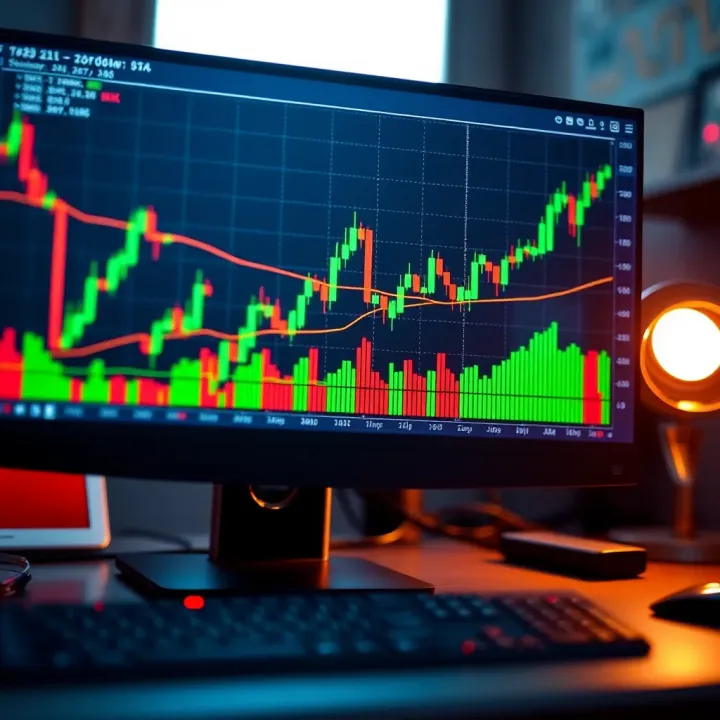
Reading charts and candlesticks is one of the most essential skills for forex traders. Candlestick charts visually display price movements within a specific period, using patterns that hint at market behaviour. For example, a long green candlestick might signal strong buying momentum, while a doji (a small-bodied candle) indicates indecision. Nigerian traders can watch these patterns on platforms like MT4 or MT5 to identify potential entry or exit points without relying solely on guesswork.
Popular indicators like moving averages help smooth out price data to reveal trends. A 50-day moving average shows the average price over 50 days and can indicate whether a currency pair is trending upwards or downwards. Crossovers of short-term and long-term moving averages often signal potential reversals. Nigerian traders find these indicators handy, especially when trading volatile pairs like USD/NGN or EUR/NGN, because they simplify complex price movements.
Support and resistance levels mark price points where a currency tends to stop and reverse. Support is the floor where prices rarely fall below, while resistance is the ceiling where prices seldom rise above. Recognising these levels helps traders place orders strategically to buy near support and sell near resistance. For example, if the naira hardly falls below ₦460 to a dollar, it may be seen as a support zone worth watching.
Economic reports and news events provide insight into a country's financial health, affecting currency value. Reports like Nigeria’s inflation rate, GDP figures, or employment data can cause sharp movements in the naira’s exchange rate. Staying current with these releases allows traders to anticipate market reactions and adjust their positions accordingly.
CBN policies and their impact on naira are particularly influential. When the Central Bank of Nigeria adjusts interest rates or intervenes in the foreign exchange market, it directly impacts naira liquidity and value. For instance, increased CBN restrictions on forex for imports can strengthen the naira temporarily but also reduce market liquidity, affecting day-to-day trading.
Global developments influencing currency values include oil prices, geopolitical tensions, and US Federal Reserve decisions. Since Nigeria’s economy largely depends on oil, fluctuations in crude prices often affect the naira’s strength. Similarly, changes in US monetary policy ripple through global forex markets, influencing local currency pairs.
Setting stop losses means placing an automatic order to exit a trade if the price moves against you by a certain amount. This limits potential losses and protects your capital. For instance, if you buy USD/NGN at ₦460 and set a stop loss at ₦455, your position will close if the price hits that level, preventing bigger losses during unexpected market shifts.
Position sizing refers to determining how much to trade based on your account size and risk tolerance. Instead of risking all funds on one trade, a sensible position might be 1–2% of your total balance. This strategy helps Nigerian traders guard against the naira’s volatility and avoid wiping out their accounts from one bad bet.
Avoiding emotional trading is about sticking to your plan and not letting fear or greed drive decisions. Many traders lose money by chasing quick profits or holding onto losing trades hoping for a reversal. Developing discipline and following strategies reduces these costly mistakes and builds lasting success.
Smart forex trading in Nigeria combines savvy use of technical tools, understanding economic fundamentals, and managing risk carefully. Each aspect supports better decision-making and guards against the market's ups and downs.
Forex trading is attractive for many Nigerians seeking extra income, but it carries risks that demand careful understanding. Traders must grasp these challenges to protect their investments and navigate the market smartly. Ignoring these factors leads to losses and frustration.
Sudden events can cause sharp swings in currency prices. For instance, an unexpected policy change by the Central Bank of Nigeria (CBN) or a political development in Lagos can make the naira fluctuate wildly against the dollar. This rapid change means prices can move in your favour or against you within minutes, impacting profits and losses. Traders must be ready for such surprises and avoid assuming stability.
Prediction methods like technical or fundamental analysis help anticipate market moves, but they have limitations. For example, economic data might suggest naira strength, but global crude oil price drops could quickly erode that forecast. In unpredictable moments, even the best models fail, warning traders not to rely solely on predictions but to combine them with sound risk management.
Fraudulent schemes have plagued many Nigerian retail traders, luring them with promises of guaranteed profits. These scams often use fake websites or unlicensed apps. Recognising signs such as unrealistic returns, pressure to invest quickly, or lack of transparency can prevent losses. Always verify brokers' credentials before depositing funds.
Dealing exclusively with brokers licensed by the Nigerian Securities and Exchange Commission (SEC) offers protection. SEC-licensed brokers comply with local regulations, ensuring funds are secure and transactions transparent. For example, reputable firms like GTBank's trading platform or Access Bank's investment services follow SEC rules, building trader confidence.
Handling the emotional ups and downs of trading is critical. When profits come, the temptation to increase stakes can grow, but uncontrolled excitement often leads to rash decisions. Conversely, losses can cause impatience or despair, prompting hasty actions to recover funds, usually worsening the situation.
Overtrading is a common pitfall where traders make too many trades driven by emotion, not strategy. This behaviour drains capital quickly, especially when the market is unstable. The solution lies in following a well-planned strategy, setting strict daily limits, and knowing when to step away to avoid burnout and preserve funds.
Understanding these challenges carries practical benefits: better risk control, smarter trading decisions, and increased chances of long-term success in the forex market.
Trading forex in Nigeria requires not just technical knowledge but also vigilance against scams, emotional discipline, and respect for the volatile nature of currencies. These factors form the core of sustainable trading practice.
🕒 Discover the best time for forex trading in Nigeria! Learn about global sessions, overlaps, and top tips to boost your trading success effectively.
Master forex trading in Nigeria with practical strategies 🏦. Learn risk management, market analysis, solid trading plans, and stay disciplined for better results 📈.
Discover how to pick the best forex trading platform in Nigeria 🏦. Learn about features, costs, security, and tips to trade confidently in forex markets.
Discover smart forex trading tips for Nigerian traders 🇳🇬. Learn about risk management, local market effects, trusted platforms, and broker advice to trade wisely.
Based on 8 reviews