

Finance and Risk Management for Nigerian Businesses
📊 Get practical insights on finance and risk management for Nigerian businesses. Learn ways to measure and control risks, use tech and regulations, and make sound financial moves.
Edited By
Ethan Morgan
Managing risks in projects matters more than many realise, especially in Nigerian businesses where uncertainties can cause serious delays and losses. From construction sites in Lagos to tech startups in Abuja, understanding risk management helps keep projects on track and budgets intact.
Risk in a project simply means anything that could go wrong, affecting the goals, schedule, or costs. The fast-changing economic conditions, power supply challenges, and fluctuating exchange rates here make risk a daily reality for many businesses.

Why risk management? It helps you spot potential problems early, think through their impact, and plan ways to reduce harm. Without it, projects often encounter costly surprises like late material delivery, price hikes, or manpower shortages – all common in Nigerian markets.
"A good risk management plan doesn't guarantee success, but it sharply cuts chances of failure by preparing you for known and unexpected challenges."
For example, a construction company building a bridge in Port Harcourt might face risks such as sudden regulation changes, imported steel delays due to forex scarcity, or even seasonal flooding during ember months. By identifying these risks early, the company can adjust timelines, negotiate better contracts, or source local alternatives.
Several Nigerian businesses in tech, agriculture, and oil sectors already practise risk management to improve outcomes. They use project management tools and risk registers to record risks and mitigation steps. Such structured approaches transform gut feeling into clear decisions.
Reducing costly project overruns
Protecting investments from unexpected shocks
Boosting confidence when presenting project plans to investors or partners
Enhancing chances of meeting deadlines and quality targets
In this practical guide, you will learn how to identify project risks, analyse their impact, and apply strategies to manage them effectively. It’s especially tailored to the Nigerian business environment, recognising local challenges and opportunities.
Ready? Let’s start making your projects less risky and more rewarding.
Risk management is a core part of project execution, especially within the Nigerian business environment. It helps identify potential obstacles before they escalate into costly problems. By understanding and managing risks, businesses can keep projects on track, avoid unexpected losses, and make informed decisions amid uncertainty.
Definition of risk in project management: In projects, risk refers to any uncertain event or condition that can affect objectives negatively or positively. This includes threats like delays, cost overruns, or resource shortages, but also opportunities that can enhance outcomes. Recognising risk means preparing for things that might go wrong or right, not just hoping for the best.
Difference between risk and issue: Risks are potential events; issues, however, are problems already happening. For example, a project may face the risk of power failure before completion—this is a risk. But if the power fails today, that becomes an issue needing immediate resolution. Managing risks proactively avoids them turning into issues that disrupt progress.
Why managing risk matters for project success: Projects rarely go exactly as planned. Managing risks lets businesses reduce surprises, stay within budget, and meet deadlines. For instance, construction projects in Lagos often face flooding risks during rainy season; identifying this early means scheduling work around weather patterns or arranging drainage solutions beforehand. This planning improves chances of timely delivery and saves costs.
Infrastructure and power supply disruptions: Frequent power outages and unreliable infrastructure slow down projects. Businesses may rely on generators, raising costs and causing delays. Take tech startups in Lagos struggling with intermittent power; without a backup plan, server uptime suffers. Managing this risk involves budgeting for alternate power and scheduling sensitive tasks during stable supply hours.
Currency fluctuations and inflation impact: The naira often fluctuates sharply, affecting project budgets especially if equipment or materials are imported. For example, a building project budgeting ₦50 million might find imported cement costs rising beyond forecasts during embers months due to inflation, stretching the budget. Effective risk management means including contingency funds and regularly updating cost assumptions.
Regulatory delays and compliance hurdles: Securing permits and meeting regulatory requirements can stall projects for months. An entrepreneur aiming to launch a manufacturing plant may face delayed environmental clearances or unclear tax guidelines. Factoring these risks into project timelines and engaging proactively with agencies can save time and guide smoother approvals.
Proper risk management is not about eliminating uncertainty but about preparing and adapting to challenges before they escalate. Nigerian businesses benefit greatly when they make risk management a daily habit rather than an afterthought.
Identifying and assessing risks early in a project can save Nigerian businesses from unnecessary delays and unexpected costs. Projects often face numerous uncertainties, and spotting potential risks ahead of time allows teams to prepare practical responses rather than scramble when problems occur. For example, a construction firm in Lagos must consider power outages and fluctuating materials prices. By identifying these risks upfront, they can plan backup power sources and lock in supplier contracts to reduce uncertainty.
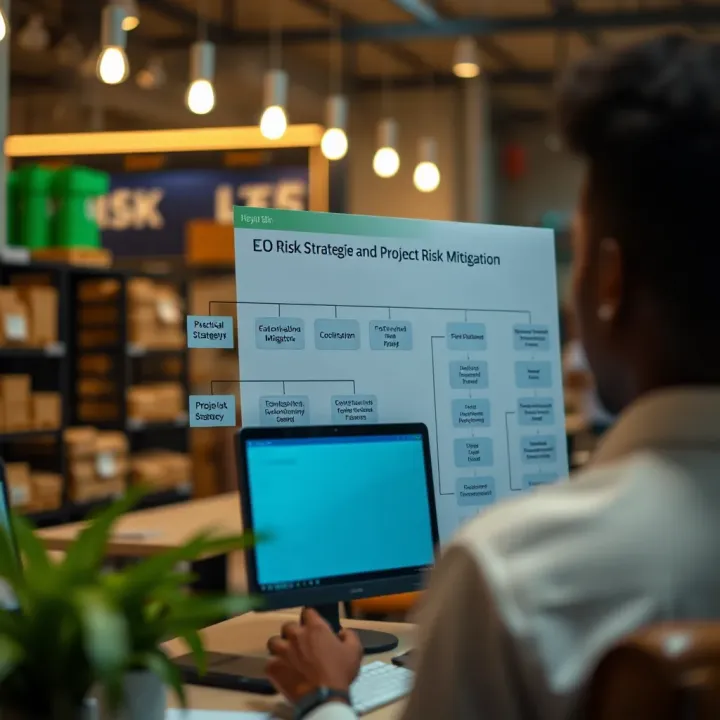
Brainstorming with project teams brings together diverse perspectives to highlight possible risks that may otherwise be overlooked. Project team members, from engineers to finance officers, each see different angles of the project. During brainstorming sessions, encouraging open discussion leads to uncovering risks related to timelines, resources, or external factors such as political events. This method is practical because it uses the collective experience within the team, making the risk list relevant and actionable.
Consulting stakeholders and experts is essential, especially when projects involve multiple parties or operate in regulated environments. Stakeholders—clients, suppliers, or government agencies—often have insights about potential obstacles. For instance, consulting with regulatory bodies helps anticipate compliance hurdles in sectors like oil and gas. Experts such as project managers or industry consultants bring specialised knowledge that can identify hidden technical or market risks.
Reviewing past project lessons can prevent repeating mistakes from similar ventures. Nigerian businesses usually learn hard lessons after project setbacks, but documenting these experiences for future projects improves preparation. A software development company that once underestimated user needs can use its post-project analysis to refine risk identification for upcoming releases. Access to these lessons encourages informed decisions rather than relying on guesswork.
Qualitative risk analysis involves evaluating risks based on subjective judgement about their likelihood and impact. It’s useful when resources or data for detailed analysis are limited. A marketing team launching a new product may rank risks like supply chain delays or negative publicity using simple scales. This helps decide which risks need immediate attention without complex calculations.
Quantitative risk analysis applies numerical data and statistical methods to estimate the scale of risks more precisely. Construction projects, for instance, might use historical cost data and probability models to calculate potential financial exposure from delays or material price increases. This approach provides a clearer picture of risk magnitude but requires reliable data and technical skills.
Prioritising risks based on impact and likelihood ensures that project teams channel efforts where they matter most. Even if a risk is very unlikely, if its impact could bankrupt the business, it deserves planning. Conversely, frequently occurring but minor risks need simpler controls. Using risk matrices to rank threats helps Nigerian entrepreneurs balance limited resources with pressing risks, ultimately enhancing project success.
Early and thorough risk identification combined with sound assessment methods equips Nigerian businesses to handle uncertainties confidently. It turns potential disasters into manageable challenges through proactive planning.
Managing risks is not just about spotting problems early; it's also about having clear tactics to handle them. Effective strategies help Nigerian businesses avoid costly setbacks, especially in sectors like construction or fintech, where unexpected issues can derail a project rapidly. By adopting practical risk management approaches, companies can protect investments and keep timelines on track.
Risk avoidance means steering clear of activities or choices that could trigger major problems. For instance, a real estate firm might avoid bidding on a site with unresolved land ownership issues to prevent legal headaches. Conversely, risk acceptance recognises that some risks are unavoidable or too minor to justify extra expense. A tech startup handling small fluctuations in user demand could choose to accept these risks, focusing resources on more serious threats.
Transferring risk involves shifting potential losses to third parties, usually through insurance policies or contractual agreements. Nigerian businesses, especially in oil and gas or manufacturing, often rely on insurance to cover equipment failures or accidents. Additionally, contracts with suppliers or contractors can include clauses that allocate responsibility for delays or defects, limiting the company’s financial exposure.
This approach plans for risks by setting aside resources or alternative options to tackle problems if they arise. For example, a logistics company might arrange backup transport routes or partner with multiple suppliers to reduce the impact of roads blocked by flooding. Contingency plans increase project resilience and reassure stakeholders that challenges have been considered.
Risk response plans detail the specific actions to take when a risk occurs. Nigerian projects benefit from clearly outlined steps, such as notifying key suppliers immediately if currency fluctuations threaten import costs. These plans promote swift action, reducing downtime and losses.
Budgeting time, money, and personnel toward managing risks is crucial. For example, a construction company might allocate funds for generator fuel to counteract power outages common in Nigerian cities. Without dedicated resources, teams may get overwhelmed when problems surface, causing delays and overspending.
Successful risk management depends on clearly assigned roles. Each team member should know their duties relating to monitoring, reporting, and addressing risks. For instance, appointing a risk officer for monitoring compliance ensures no regulatory requirement slips through, which is vital given Nigeria’s complex approval processes.
Effective risk strategies turn uncertainties into manageable tasks. Integrating them into your project plan safeguards against surprises and keeps your business one step ahead.
Practical tools and technologies are indispensable in managing risks effectively, especially for Nigerian businesses juggling complex projects. Using the right software and data resources can sharpen your ability to spot potential problems earlier, plan wisely, and communicate clearly across your team and stakeholders. This section highlights digital and local tools that can raise your risk management game.
Project management software with risk modules often integrates risk tracking directly within task schedules, budget controls, and resource allocation. For example, platforms like Microsoft Project or Asana now offer add-ons or inbuilt features to record and monitor project risks. This helps managers link risks to specific tasks and timelines, ensuring nothing slips through the cracks. In a Nigerian context, where deadlines and budgets are often tight due to power outages or logistics delays, such software gives a real-time picture of how risks might impact the entire project.
Risk register and dashboard tools provide a central place to list, prioritise, and track risks. Digital dashboards, used in tools like Smartsheet or Trello, visualise risk severity, likelihood, and mitigation status. For a Lagos-based construction firm, keeping up-to-date with risk status on a dashboard accessible to all key project members can prevent costly miscommunications. Moreover, digital risk registers can be updated instantly, unlike paper-based ones that quickly become outdated.
Use of data analytics for forecasting risks enables businesses to move beyond gut feeling towards evidence-based decisions. By analysing historical project data, economic trends, or supply chain info, analytics tools can predict areas where delays or cost overruns are likely. Nigerian companies that rely on fintech platforms such as Paystack for payment timelines or CBN economic reports to forecast inflation effects can use this data alongside project-specific factors to anticipate risks well ahead.
Leveraging Nigerian consulting services offers businesses grounded expertise tailored to local realities. Firms like PwC Nigeria or KPMG Lagos provide specialised risk management advice that aligns with country-specific regulatory and market conditions. This local knowledge is crucial for projects in sectors like oil and gas or agriculture, where unexpected changes from government policies or community relations can become risks.
Accessing data from CBN and regulatory bodies helps project managers stay informed about the wider economic and regulatory environment. Regular updates from the Central Bank of Nigeria (CBN) on exchange rates, monetary policy, or capital flow restrictions can influence project costs and timelines. Similarly, insights from agencies like the Nigerian Investment Promotion Commission (NIPC) or the Corporate Affairs Commission (CAC) help anticipate compliance risks early.
Training and certification programmes build internal capacity, ensuring that your team understands how to identify and manage risks effectively. Nigerian institutions like the Project Management Institute (PMI) Nigeria Chapter offer certifications (such as PMP) that include risk management modules. Besides boosting skills, these certifications enhance the credibility of your project team when negotiating with investors or stakeholders.
Consistently applying the right tools and tapping local expertise transforms risk management from guesswork to a structured, proactive process tailored for Nigerian project challenges.
By combining digital tools with local insights and training, Nigerian businesses can build robust systems to keep projects on track, avoid surprises, and protect investments against unavoidable uncertainties.
Monitoring, reporting, and learning are the backbone of effective risk management in projects. For Nigerian businesses, this process ensures risks are constantly tracked, communicated clearly, and lessons are extracted to strengthen future endeavours. Without vigilant monitoring, hidden risks can escalate, causing delays or ballooning costs especially given our peculiar challenges like fluctuating exchange rates or infrastructural glitches.
Regular risk reviews and updates keep risk management dynamic rather than a one-time checklist. Projects in Nigeria often face changing environments, such as sudden regulatory roadblocks or power outages, so revisiting identified risks every month or quarter helps project teams respond on time. For instance, a construction firm might discover midway that import delays on materials are worsening. By reviewing risks regularly, they can adjust delivery timelines or negotiate with suppliers before things spiral out of control.
Using key performance indicators (KPIs) helps quantify how well risks are controlled. KPIs such as the number of risk incidents, delays caused by risks, or budget overruns due to unforeseen events offer measurable insight. These indicators allow project managers and investors to spot weak spots quickly. For example, if the KPI shows escalating downtime linked to generator failures, this signals that the mitigation measures require strengthening or budgeting adjustments.
Communication between stakeholders ensures everyone from project sponsors to site workers understands risk status. In Nigeria’s diverse business landscape—where projects involve various ethnic groups and institutions—clear communication avoids misinformation and confusion. Constant updates through meetings, reports, or dashboards create transparency, build accountability, and foster collaboration. It is better to flag emerging risks sooner rather than later so corrective actions can be taken promptly.
Conducting risk audits after project completion involves reviewing the entire risk management process to verify what worked and what fell short. Nigerian projects often encounter unexpected risks due to the environment’s unpredictability, so audits offer valuable insight to prevent repeats. An audit may reveal that risk transfers via contracts did not cover certain contingencies fully or that onsite risk evaluations were inadequate.
Documenting lessons learned formally records experiences so future projects can benefit. A firm that builds bridges in Lagos, for example, might note that weather-related delays require buffers during the rainy season. Capturing these lessons prevents repeated mistakes and contributes to organisational knowledge, making it easier to plan and budget projects effectively.
Improving future project risk management means applying the knowledge from past projects to sharpen processes. Nigerian businesses often operate in tight margins, so this continuous improvement is a critical competitive advantage. By adjusting risk frameworks, training staff better, or updating digital tools after each project, companies enhance resilience and reduce costly surprises going forward.
Consistent monitoring and learning from risks convert uncertainties into insights, enabling Nigerian businesses to manage their projects more confidently and successfully.
In sum, paying close attention to risk throughout and after a project completes is what separates successful Nigerian businesses from those continually chasing losses. Keeping risks visible, measurable, and well-communicated, while learning actively, is the smart way to thrive amid the challenges.
📊 Get practical insights on finance and risk management for Nigerian businesses. Learn ways to measure and control risks, use tech and regulations, and make sound financial moves.

📉 Nigerian businesses face forex shocks daily. Learn practical methods to manage currency risks, protect your ₦, and stay afloat despite naira fluctuations and ember months challenges.
Learn practical risk management strategies to protect Nigerian businesses from threats like market shifts, power issues, and currency fluctuations. 📉🔍

Boost your career with top risk management certifications 🇳🇬. Discover which ones fit Nigerian sectors, improve your skills, and increase job chances today.
Based on 15 reviews