
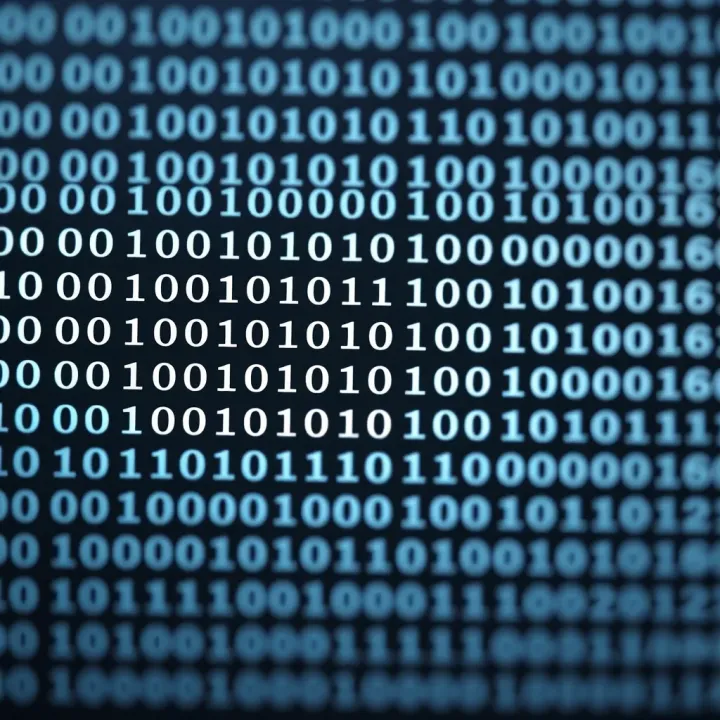
Understanding Binary Numbers in Computing
🔢 Explore how binary numbers power computing! Learn their basics, conversion, operations, and why they matter in everyday tech and digital electronics.
Edited By
Isabella Hayes
Binary systems form the bedrock of all modern computing. At its core, a binary system uses just two symbols—0 and 1—to represent data, unlike our everyday decimal which rests on ten digits (0 through 9). This seemingly simple idea carries a lot of weight because digital devices process information using electrical signals interpreted as either ON or OFF, aligning naturally with binary's two-state design.
In practical terms, every file you save, every transaction at a POS terminal, and even data sent across networks rests on binary representations. For example, a Ghanaian entrepreneur running an e-commerce site relies on servers translating product details into countless sequences of ones and zeroes to keep the website running smoothly.

Given Nigeria's growing tech scene, understanding binary systems gives traders, investors, and brokers an edge in grasping the backbone of various digital platforms powering payments, stock trading apps, and data analytics tools. Binary arithmetic—adding, subtracting, multiplying, and dividing binary numbers—works similarly to decimal maths but only with two digits. This arithmetic underlies operations in programming logic and microprocessor functions.
"Mastering binary concepts aids in decoding how software and hardware interact, providing clearer insight into the technology our businesses depend on daily."
Reliability: Binary's two-state system (0 and 1) handles noise and errors better than multiple states, crucial for Nigeria's often unstable power and network conditions.
Simplicity: Hardware design is cheaper and more efficient because only two voltage levels are needed, helping reduce costs for tech firms and startup hubs in Lagos and Abuja.
Speed: Binary logic enables rapid processing essential to handle high-frequency trading or real-time data analysis in fintech.
Binary number representation and conversion techniques
Binary arithmetic and logic operations that underpin computing tasks
Programming methods to manipulate binary data in languages popular in Nigeria such as Python, JavaScript, and Java
This basic understanding is especially useful for investors evaluating tech startups or fintech companies where digital infrastructure depends heavily on binary systems. Instead of glossing over technical details, this article breaks down essential binary concepts with clear, practical examples tailored to the Nigerian context.
In the next sections, we will explore how binary numbers are formed and computed in everyday technology, equipping you with knowledge to navigate Nigeria's digital economy more effectively.
Understanding the basics of the binary number system is fundamental for anyone keen on making sense of computing technology. This numeric system forms the backbone of how digital devices represent, process, and store information—right from your smartphone to big data servers. Grasping these basics helps traders, investors, and entrepreneurs alike appreciate how their digital tools operate under the hood, giving a clearer view of technology's role in business.
Binary digits, or bits, make up the simplest unit of data in computing. Each bit can be a 0 or a 1, representing off or on states, respectively. Imagine a streetlamp that can only be switched completely off or on—this on/off idea reflects how bits work inside digital circuits. In practice, these bits combine to represent complex information, like numbers, letters, or images, by forming patterns.
While we use the decimal system daily, with ten digits (0–9), computers rely on binary, a base-2 system that uses only two digits: 0 and 1. This difference stems from practicality; electrical circuits are simpler and more reliable when dealing with two states rather than ten. For example, calculating the decimal number 13 requires combining four binary digits (1101). Understanding this distinction helps clarify why digital systems operate differently from human counting yet can deliver the same results in a different form.
Groups of bits come together to form bytes, each consisting of eight bits. A byte can represent 256 different values (from 0 to 255), enough to encode individual characters like letters and symbols on your keyboard. For instance, the letter ‘A’ is stored in a computer as the byte 01000001. Knowing how bytes function helps you understand data volume: a text message of 100 characters roughly takes 100 bytes or 800 bits.
Converting decimal numbers to binary involves dividing the decimal number by two, tracking remainders, and arranging these to form the binary equivalent. Conversely, binary to decimal conversion sums relevant powers of two where bits are set to 1. For example, decimal 18 is binary 10010, calculated as (1×16) + (0×8) + (0×4) + (1×2) + (0×1). This skill is practical, especially for programmers and analysts dealing with low-level data inspection or performance optimisation.
Mastering these basics not only demystifies how digital data works but also builds a foundation for deeper exploration into computing systems, beneficial for professionals navigating Nigeria’s growing tech landscape.
Binary digits are the building blocks of digital data.
Binary uses only two digits, while decimal uses ten.
Bytes group bits to represent meaningful data units.
Converting between decimal and binary is essential for understanding computer operations.
With these concepts, you can better appreciate how technology processes information and how it may impact your digital ventures or investments.

Binary forms the backbone of digital devices, acting like the language computers speak to process and store information. From the moment you switch on your computer or tap your phone screen, binary signals are at work translating commands into actions and data into meaningful output.
Processors, the brains of digital devices, operate using simple binary signals—represented by 0s and 1s—to perform complex tasks. Each binary digit corresponds to an electrical state: a high voltage usually means 1, and low voltage means 0. These binary inputs allow processors to execute instructions by turning signals on or off rapidly.
For example, a processor might receive the binary instruction to add two numbers or compare values, all done in streams of 0s and 1s. Thanks to this system, even the most complex apps you run are broken down into basic binary operations, ensuring fast and reliable performance.
Memory devices like RAM, SSDs, and HDDs store data as sequences of binary codes. Each bit—either 0 or 1—represents a unit of information. These bits combine into bytes (8 bits) that encode letters, numbers, images, or sound.
For instance, the letter ‘A’ is stored as the binary code 01000001 in ASCII encoding. This binary encoding allows digital devices to organise and retrieve vast amounts of data efficiently. In Nigeria, where digital services are growing fast, understanding this helps entrepreneurs and developers optimise storage solutions and manage data securely.
When you send a message or stream video over the internet, your device translates that information into binary signals for transmission. These 0s and 1s travel through wires, fibre optics, or wireless networks, ensuring data reaches its destination intact.
Take, for example, mobile banking apps popular in Nigeria; the transaction details are converted into binary and sent securely across networks. Binary’s simplicity and reliability make it ideal for transmitting data in noisy environments, like crowded urban centres with fluctuating network quality.
Binary systems also include techniques to detect errors during data transmission. Codes like parity bits or checksums attach extra binary digits that verify if the data arrived correctly.
Imagine sending a ₦10,000 payment through USSD; error-detection binary codes check if the transaction information came through without mistakes. If errors are found, the system can request resend or flag the problem. This binary-based error detection safeguards everyday digital transactions and communications, critical for trust and efficiency.
Understanding how binary operates in hardware and communication underlines why even the most complex digital processes depend on simple on/off signals. This foundation is vital for anyone investing, trading, or developing in Nigeria’s tech-driven economy.
Binary arithmetic and logic operations form the backbone of all computing activities. These operations enable devices to process, manipulate, and interpret data, making digital systems functional. For investors, traders, and tech entrepreneurs, understanding these operations is vital, as they influence everything from proprietary trading algorithms to high-frequency trading platforms.
Adding, subtracting, and multiplying binary numbers work similarly to their decimal counterparts but follow simple rules based on 0s and 1s. For example, in binary addition: 0 + 0 equals 0, 1 + 0 or 0 + 1 equals 1, while 1 + 1 results in a carry-over, producing 10 (which means 0, carry 1). This method scales for larger binary numbers, enabling computers to calculate sums efficiently. Multiplication involves shifts and additions, much like how decimal multiplication uses place value.
These skills are practical because every calculation your computer or trading system performs relies on binary arithmetic. From basic price computations on the Nigerian Stock Exchange (NGX) to complex financial models, accurate binary arithmetic ensures reliability and speed.
Binary overflow and underflow occur when an operation exceeds the fixed number of bits allocated. Overflow happens when the result is too large to represent, while underflow refers to a value too small, often zero or negative in signed systems. For instance, adding two large 8-bit binary numbers, like 11111111 (255 decimal) + 00000001 (1 decimal), causes overflow as the result needs 9 bits.
Overflow can lead to errors in trading algorithms, causing wrong order sizes or prices that may lead to financial loss. Recognising and handling overflow properly—such as through error checking or larger bit-length variables—helps maintain system integrity.
Logical operations provide decision-making capabilities. The basic operations include AND, OR, NOT, and XOR:
AND returns 1 only if both inputs are 1; otherwise, 0.
OR returns 1 if at least one input is 1.
NOT inverts the input: 0 becomes 1 and vice versa.
XOR (exclusive OR) returns 1 if inputs differ; 0 if they’re the same.
These operations underpin computer logic and programming, guiding conditional statements and comparisons that control program flow.
In practical computing, logic gates implement these operations in hardware, enabling CPUs to perform tasks like comparing prices or checking trade conditions. For example, a trading bot might use an AND gate logic to execute an order only when two conditions are met: the stock price exceeds a threshold and trading volume is above average.
Mastering these binary logic operations and arithmetic is key for anyone building software or systems reliant on accurate calculation and decision-making. In Nigeria’s growing tech sector, this knowledge helps develop efficient fintech solutions and automated trading tools that handle binary data confidently.
Understanding how binary arithmetic works alongside logic operations empowers you to troubleshoot, optimise, and innovate within digital platforms—be it crafting a new app, analysing market data, or running algorithms smoothly.
Handling binary data is central to modern programming, especially when dealing with low-level operations or systems programming. For traders, analysts, and entrepreneurs relying on technology, understanding how to manipulate binary information efficiently can directly impact the performance and security of applications. Programming approaches that work directly with binary values allow for fine control over data storage, transmission, and encryption — factors that matter in data-driven decision-making environments.
Bitwise operators manipulate individual bits within binary numbers. In languages like Python and C, these operators let you flip, shift, combine, or mask bits quickly and with minimal processing overhead. For example, in C, the bitwise AND (&), OR (|), XOR (^), and NOT (~) operators provide direct control over data at the bit level. Python also supports these operators, making it easier for developers to apply binary manipulations in scripting as well as system-level tasks.
These operations are not just academic; they matter in practical tasks like setting flag values, toggling options, or checking specific binary conditions without affecting the entire data structure. A C programmer, for instance, can use a bit mask to switch on or off visibility flags in a trading dashboard efficiently, avoiding heavier conditional checks or additional memory usage.
When it comes to optimisation and security, bitwise operators are invaluable. They speed up computations by reducing the need for complex arithmetic or multiple conditional branches, which is crucial for systems requiring fast response times like algorithmic trading platforms or real-time analytics. Also, in security, bitwise operations underpin many cryptographic functions. Simple XOR operations, for example, form the basis of generating checksums or simple ciphers to obfuscate sensitive information in communication protocols used by fintech applications.
Working with binary files is essential for applications that need to read or write data in compact, efficient forms. Unlike text files, binary files store raw byte streams which programmes like those for stock market data archives or transaction logs handle routinely. Efficient binary storage reduces filesize and speeds up data retrieval, which matters in Nigeria where bandwidth and storage costs remain concerns for startups and SMEs.
When managing binary files, developers must consider endianness — the order in which bytes are stored — to avoid data corruption when exchanging files across different hardware. Libraries in Python and C provide functions to open, read, write, and seek binary data safely, enabling the creation of reliable data systems, even in resource-limited environments.
Encoding schemes and character sets also have practical importance, especially in Nigeria’s multilingual context. UTF-8 encoding remains dominant because it supports a broad range of characters, including Yoruba, Igbo, and Hausa scripts without data loss. Applications handling user input or generating reports must respect these encoding standards to properly display special characters like the Yoruba diacritics. Understanding character encoding prevents misinterpretation of data, which could otherwise lead to errors or security loopholes in customer-facing applications.
Bitwise programming and binary file manipulation offer powerful tools to build faster, more secure software, especially relevant where performance and data integrity cannot be compromised.
In Nigeria’s digital economy, mastering these programming approaches provides a competitive edge — enabling developers and businesses to create applications that are lightweight, secure, and adaptable to local needs.
Understanding the hurdles learners face whilst grasping binary systems is vital, especially for those involved in finance, trading, and tech entrepreneurship. Many struggle initially because binary concepts can feel very abstract compared to everyday decimal math. Recognising these challenges helps build effective learning strategies that ensure mastery and accuracy, vital for coding, data analysis, or managing digital financial tools.
Binary's abstraction comes from representing information using just two symbols—0 and 1—rather than the ten digits we use daily. This stark shift makes it harder to visualise or intuitively understand numbers and logic operations. For example, converting binary numbers to decimal or interpreting bitwise operations requires shifting mental gears, which can be confusing without frequent practice. Traders or analysts working with binary-coded data may initially find it challenging to interpret systems relying on these concepts, like encryption or data compression.
Manual calculations in binary, such as adding or shifting bits, frequently result in mistakes. Unlike decimal, where carrying over is straightforward, binary overflow or underflow errors easily slip in due to its simpler but more rigid structure. Even small errors can cause bugs in software tools or misinterpretation of data signals. For instance, a misplaced bit can change a financial calculation or stock indicator, leading to wrong decisions. Without automated checks or thorough revision, such mistakes are common among learners.
No shortcut exists for mastering binary without practical application. Using simulation software or online binary calculators lets learners see real-time results of bitwise operations or conversions. For example, coding simple programs in Python or C that perform binary arithmetic reinforces understanding through active problem-solving, not just theory. Regularly practising these problems sharpens mental models, reducing conceptual fog and error rates. Even small daily exercises can build confidence and familiarity with binary handling.
Nigeria has vibrant tech ecosystems offering workshops, coding boot camps, and meetups that support beginners in binary and programming skills. Joining groups like Andela Alumni, Fintech hubs in Lagos, or university coding clubs opens access to mentorship and practical advice tailored to Nigerian contexts. These communities can provide specific guidance on dealing with local challenges such as limited power supply, low-end devices, or internet stability when working with binary systems in real projects. Networking also exposes learners to real-world applications of binary in Nigerian fintech, agriculture tech, and telecommunications.
Tackling the early struggles of binary implementation with practical practice and communal support not only improves technical skills but also enhances decision-making confidence for entrepreneurs and analysts handling digital tools daily.
🔢 Explore how binary numbers power computing! Learn their basics, conversion, operations, and why they matter in everyday tech and digital electronics.

💻 Explore how binary implementation shapes computing: from data representation to processing, optimization tips, challenges, and real-world tech examples.

🔐 Explore how binary login systems operate, their role in secure authentication, common uses, and practical tips for tech pros and enthusiasts in Nigeria.
Explore how binary operations work in advanced math 🧮, their key properties, examples, and role in algebraic structures like groups and rings 📚.
Based on 12 reviews