

Best Binary Options Brokers in Nigeria: A Clear Guide
Looking for trustworthy binary options brokers in Nigeria? Learn how to spot reliable ones, understand account types, platform features & risks 📊🇳🇬
Edited By
Sarah Mitchell
Binary options trading has become popular among Nigerian traders looking for quick returns and accessible markets. It involves predicting whether the price of an asset—such as currencies, stocks, or commodities—will rise or fall within a set period. If your prediction is correct, you earn a fixed payout; if wrong, you lose your investment.
Unlike traditional trading, binary options are straightforward, with only two possible outcomes: ‘yes’ or ‘no’. This simplicity attracts many Nigerians venturing into financial markets, but it also calls for a clear understanding to avoid losing money.
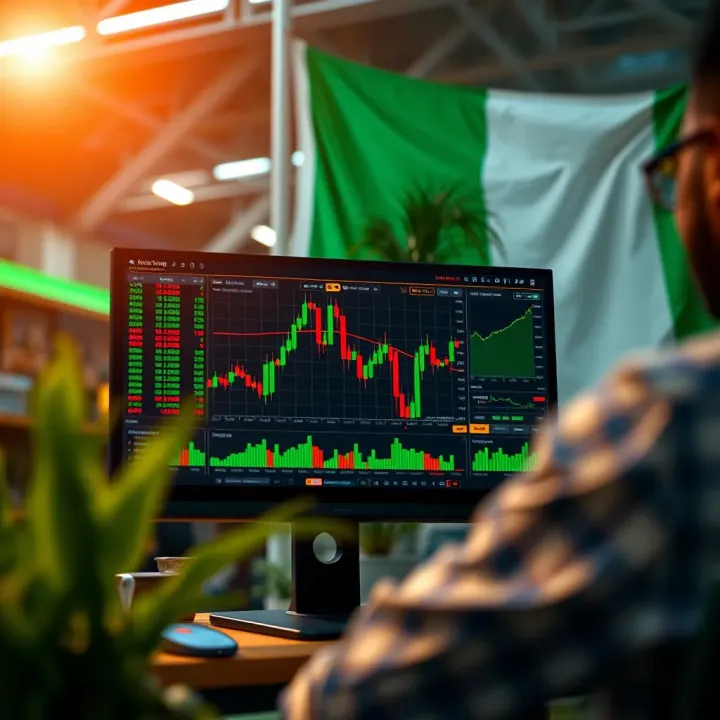
Trading binary options requires discipline and solid strategies; it’s not just about luck or quick guesses.
Binary options in Nigeria typically offer expiry times ranging from 60 seconds to several hours. You select an asset, decide on your investment amount—often starting as low as ₦1,000—and predict whether the price will be above or below a certain level at expiry.
Payouts vary but commonly range between 70% and 90% of the invested sum. For example, if you invest ₦10,000 predicting the price will rise and your trade finishes in the money, you stand to earn ₦17,000–₦19,000 total (your initial ₦10,000 plus profit).
Risks are clear: if the market moves against your prediction, you lose your investment. So, managing risk is essential.
Due to the proliferation of scams, Nigerians must pick trusted brokers that accept Nigerian clients. Check for:
Proper regulation from recognised authorities (even international regulators like CySEC or FCA)
Positive reviews from Nigerian traders
Local payment options like bank transfers, USSD, or Nigerian card payments
Platforms like IQ Option and ExpertOption have users in Nigeria, but always test with small sums before committing large funds.
One big challenge is the regulatory grey area: the Securities and Exchange Commission (SEC) Nigeria hasn’t fully regulated binary options, which adds risk.
Also, naira volatility and occasional banking restrictions may affect deposits and withdrawals.
That said, Nigerian traders often use mobile data to trade on the go—amid Lagos traffic or while waiting at barber shops—and the ease of mobile platforms is a big plus.
Understanding these market realities helps prepare you better. Next sections will explore strategies and risk controls to improve your chances when trading binary options.
Understanding binary options trading is fundamental for anyone interested in this form of investment in Nigeria. Binary options offer a straightforward way to trade on market movements without dealing with complex instruments. However, their simplicity can be deceptive, so knowing how they work and what sets them apart from traditional trading helps traders make informed decisions and avoid pitfalls.
Binary options are financial contracts where the payoff is either a fixed amount or nothing at all, depending on whether a specific condition is met at expiry. In simple terms, you bet on whether an asset’s price — like oil, the naira-USD exchange rate, or NSE-listed stocks — will go up or down over a particular timeframe. If your prediction is correct, you earn a predetermined return; if not, you lose your stake.
This fixed-return characteristic makes binary options quite different from traditional investments, where profits or losses vary with price movements. It’s like placing a bet on which side a danfo will take on a busy Lagos street: you either win a known prize or get nothing.
Unlike traditional trading, where you own or short sell the asset and your potential profits or losses depend on price fluctuations, binary options focus solely on the direction of price movement within a set period. Traditional trading requires analysing complex charts and managing varying risk levels, while binary options boil the process down to a yes-or-no outcome.
For example, if you buy shares in GTBank, your gains grow (or shrink) as the share price moves. With binary options, you just guess if the price will close above or below a strike price at expiry, regardless of how far it moves. This feature appeals to traders looking for clear-cut results and limited downside.
The most common binary options are high/low (also called call/put). You predict whether the asset’s price will be higher or lower than the current level at expiry. For example, if you expect the price of Brent crude oil to rise, you buy a high option.
Other varieties include one-touch options, where you profit if the asset price touches a specific level before expiry, regardless of where it ends. There’s also range options, predicting whether price stays within or leaves a certain range.
These options offer flexibility for traders wanting different risk and reward profiles. Nigerian traders can use these types to leverage local market events, such as CBN policy changes affecting FX rates.

The payout in binary options is fixed and usually known upfront, often between 70% to 90% return if the prediction is correct. For instance, placing ₦50,000 on an oil price increase might yield ₦85,000 if successful — that’s ₦35,000 profit plus your initial stake.
Expiry times range widely from as short as 60 seconds to several hours or days. Short-term expiry suits fast-moving markets or day traders, while longer expiry supports more patient strategies. Choosing the right expiry time is critical; a trader who picks an expiry too soon might lose because the price hasn’t moved as expected.
Successful binary trading depends on understanding these basic features and choosing trades aligned with your market knowledge and risk appetite.
Mastering the basics helps traders approach binary options confidently, knowing exactly what to expect and how to plan trades. For Nigerians, this understanding is key to navigating the unique challenges of local markets and making smart investment moves.
Taking the first steps in binary trading in Nigeria involves key decisions that impact your success and safety. This section helps you understand how to pick the right broker and set up your trading account effectively. Knowing these basics protects your funds and puts you on the right path right from the start.
Both local and international brokers operate in the Nigerian binary options market. Local brokers, though fewer, often understand the Nigerian trading environment better, offering support tailored to local payment methods like bank transfers and USSD codes. International brokers, on the other hand, tend to provide more advanced platforms and a wider range of assets, but they require careful vetting to avoid scams.
Licensing and regulation are critical in broker selection. Many brokers claim to be regulated, but Nigerians should verify if the broker is licensed by recognised authorities such as the Financial Conduct Authority (FCA) in the UK or ASIC in Australia. Regulation ensures the broker follows rules that protect traders from unfair practices and fraud. Since Nigeria does not yet have strict local regulation on binary options brokers, relying on credible international licences is crucial.
When choosing a platform, look for features that match your trading needs. These include an intuitive interface, real-time charts, and access via mobile phones since many Nigerian traders rely on smartphones. Also, test the platform’s reliability during peak hours to avoid downtime. Some brokers offer demo accounts, which allow practising without risking real money — a valuable feature especially when you are starting.
Brokers usually offer different account types, such as basic, premium, or VIP. For Nigerian traders, starting with a basic account is sensible to test the waters. The verification process typically involves submitting identification documents like your National Identification Number (NIN) and a utility bill to confirm your address. Completing verification is important to avoid account restrictions or delays during withdrawals.
Funding accounts in Nigeria has become more convenient with options like direct bank transfers, USSD codes, and e-wallets such as Opay or Paystack, which integrate well with Nigerian banks. These options help fund your trading account quickly and securely, making trading accessible even if you’re outside major cities.
Minimum deposits vary by broker, often ranging from ₦10,000 to ₦50,000. Understanding the minimum deposit helps avoid surprises and match your trading budget. Equally important is knowing the payout procedures — some brokers pay earnings directly to Nigerian bank accounts, while others require withdrawals through third-party wallets. Selecting brokers with straightforward, fast payouts ensures you have access to your earnings without unnecessary hurdles.
Starting well means choosing trusted brokers and setting up your account with care — these early steps protect your investment and build your confidence in binary trading.
By paying attention to broker reliability, licensing, platform features, and account setup details, Nigerians can trade binary options with greater safety and better chances for success.
Effective strategies form the backbone of successful binary options trading in Nigeria. Without them, trading becomes a gamble rather than a calculated risk. Nigerian traders face unique challenges like market volatility and limited access to real-time data, so having clear, tested strategies helps sharpen decision-making and improve chances of profit.
Trend following is about catching the direction an asset is moving. If the price of an asset, say the value of Brent crude oil futures, is consistently rising during the day, a trader using this approach will open a high/buy option predicting that the trend will continue until the trade expires. Momentum strategies focus on the speed or strength of that movement, identifying when an asset is gaining or losing power in its price action. For Nigerian traders, this approach suits markets that show clear directional moves throughout the trading day, such as forex pairs like USD/NGN or major Nigerian stocks.
By following trends, traders avoid fighting the market. Rather than guessing random price fluctuations, they act in line with broader moves influenced by news, economic releases, or seasonal demand shifts. Momentum can be gauged by tools such as moving average convergence divergence (MACD) or the relative strength index (RSI), which we will touch on under advanced techniques.
Support and resistance are price points where assets historically stop falling or rising. Support is where buyers step in, preventing prices from going lower, while resistance is a ceiling price where sellers come in strong. Nigerian binary options traders use these levels to time entries and exits.
For example, if the Nigerian Stock Exchange (NGX) index struggles repeatedly to break past a certain point during trading sessions, that level becomes resistance. Placing a low/sell binary option near this resistance can yield profitable trades if the price reverses as expected. Similarly, buying near support levels minimises downside risk and improves odds of success. This method relies on historical price data, so access to accurate charts and timely updates remains vital.
Beyond basic chart reading, technical indicators refine trading accuracy. Indicators like Bollinger Bands, stochastic oscillator, and moving averages help traders identify entry points and predict price behaviour in short timeframes suitable for binary options.
For Nigerian traders, oscillators like RSI help spot overbought or oversold conditions which often precede reversals—valuable in timing one-touch binary trades. Meanwhile, moving averages smooth out price noise, highlighting genuine trends useful for trend following strategies. Using a combination of indicators improves reliability rather than relying on one signal alone.
Even the best strategy fails without sound money management. Nigerian traders should decide beforehand how much to invest per trade to avoid wiping out their capital on a bad run. A common rule is to risk only 1–5% of your trading account per position.
Practising stop-loss limits is tricky with binary options but setting daily loss or profit caps helps control exposure and lock in gains. Diversifying across different assets or expiry times also spreads risk. Besides, trying demo accounts helps you test strategies and manage stakes without risking real money, especially given fluctuating naira exchange rates and market uncertainties.
Successful binary options trading in Nigeria blends simple strategies with disciplined money management. Clear trend and support/resistance tactics, enhanced by technical indicators, empower traders to act decisively rather than gamble. Always pair strategy with responsible capital handling for best results.
Managing risks is a vital part of trading binary options, especially in Nigeria’s dynamic financial environment. Without solid risk controls, traders risk losing hard-earned capital quickly due to market swings and unforeseen events. This section highlights specific risks and practical actions to keep your investments safer.
Binary options rely heavily on predicting whether an asset’s price will rise or fall within a short window. Market prices can be highly volatile, affected by economic reports, political events, or even local news in Nigeria. For instance, unexpected changes in oil prices or naira exchange rates can cause significant price shifts on the Nigerian Stock Exchange (NGX), making the market unpredictable.
A trader betting on a stock might find that an unforeseen event swings the price sharply against their position right before option expiry. Volatility creates both opportunity and risk; it demands constant attention and quick decision-making.
In binary options, the payout is either a fixed amount or zero, meaning you can lose your entire investment for a single trade. Unlike traditional shares where partial value might be recovered, a wrong prediction in binary trading wipes out the amount staked.
This all-or-nothing nature means that careless or uninformed trading quickly depletes your funds. For example, investing ₦50,000 on a high/low option that expires worthless results in losing the whole ₦50,000. Being aware of this finality helps traders approach each trade cautiously.
Successful traders set clear boundaries on how much they risk per trade and over a period. This prevents sweeping losses that can harm their entire portfolio. A common rule is risking no more than 2-5% of your total trading capital on any single position.
For example, if you start with ₦200,000, limit each option trade to ₦4,000 - ₦10,000. This way, a bad streak won’t completely drain your money, allowing more trades and time to learn.
Rather than putting all funds into one asset or market, diversifying spreads the risk. You might trade options on Nigerian equities, foreign currencies, or commodities like oil and gold, balancing exposure.
Diversification mitigates losses from one market’s sudden plunge. If naira forex rates spike but oil prices remain steady, your diversified trades help cushion losses and steady returns.
Practicing on demo accounts offered by most brokers is an excellent way to understand market behaviour without risking real money. This hands-on experience helps you test strategies and see potential mistakes before committing cash.
Demo accounts mimic real trading conditions, showing how different assets move. For Nigerians new to binary options, spending time on these platforms can build confidence and sharpen decision-making before going live.
Risk management is not just about avoiding losses but sustaining your capacity to trade wisely over time. It’s the bridge between reckless gambling and professional investing.
By recognising these risks and applying practical steps, Nigerian traders can improve their chances of success in binary options and handle the unpredictability of local and global markets more effectively.
Understanding the legal landscape around binary options trading in Nigeria is vital before you commit your money. It helps you know your rights and the risks, especially when it comes to identifying trustworthy brokers and avoiding scams.
Nigeria's financial regulatory framework covers various investment activities, but binary options exist in a grey area. The Securities and Exchange Commission (SEC) Nigeria regulates securities markets, but binary options are often excluded from traditional securities definitions. This leaves much of binary trading unregulated locally, raising risks for traders.
The Central Bank of Nigeria (CBN) has issued warnings about binary options trading, emphasising that many platforms operate without CBN approval. The CBN views most binary options brokers as high-risk or outright fraudulent, warning Nigerians to steer clear. This stance matters because it highlights the lack of legal protection if you suffer losses or face fraudulent activities.
Fraudulent platforms often promise unrealistic returns or pressure users to deposit large sums. Common signs include platforms that lack clear contact information, use aggressive sales tactics, or fail to provide verifiable regulatory credentials. For example, some brokers may claim licences from non-existent bodies or overseas regulators with little oversight.
To verify broker credentials, check if the platform is registered with recognised authorities such as SEC Nigeria or internationally respected bodies like the UK’s Financial Conduct Authority (FCA). However, do not rely solely on a broker’s website. Look for independent reviews, testimony from other Nigerian traders, and avoid brokers blocked by regulator warnings. Verified brokers typically offer transparent terms, clear payout information, and proper customer support.
Staying cautious and informed about legal and regulatory warnings can save you from losing money to scams. Always research thoroughly before depositing funds.
Taking these legal and regulatory aspects seriously positions you to trade more safely and avoid costly mistakes in the Nigerian binary options market.
Looking for trustworthy binary options brokers in Nigeria? Learn how to spot reliable ones, understand account types, platform features & risks 📊🇳🇬
📈 Discover how Nigerian traders can navigate binary options trading with practical tips on risks, trusted platforms, scams, and smart strategies for ₦ profit.

📊 Explore binary options trading in Nigeria with expert tips, legal insights, and risk advice. Learn how to trade wisely and avoid common mistakes.

Explore how binary options work in Nigeria, learn about risks, regulations, and get practical tips to trade smartly in this growing market 📊🇳🇬
Based on 14 reviews